Our “Reading Comprehension and Language Development” series is going on! Sharpen your vocabulary knowledge and use, reading skills, critical thinking, and language awareness you need to improve your IELTS or TOEFL score.
For generations, the people of Bellmare had believed that their island was permanent.
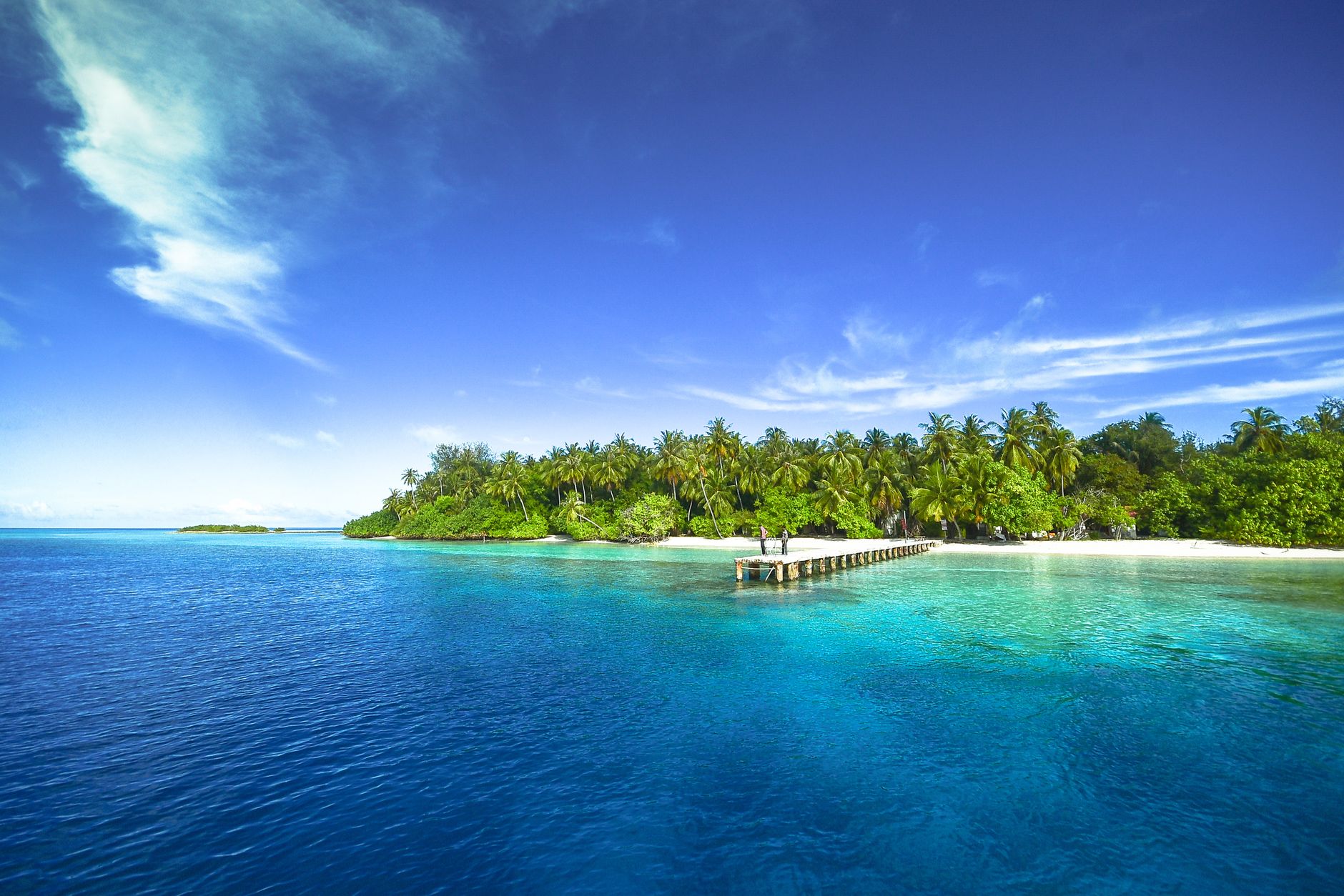
It appeared on every map, surrounded by a narrow strip of golden sand and a vast blue sea. Houses had been built close to the shore, fishermen had inherited their boats from their fathers, and children had grown up hearing the same reassuring phrase: The sea may change, but the island will always be here.
Then the shoreline began to move.
At first, nobody was particularly concerned. A few metres of beach disappeared after an unusually violent winter storm, but similar storms had occurred before. The villagers repaired their fences and rebuilt a damaged footpath.
The following year, however, another section of coastline vanished.
Dr. Maya Chen, a coastal scientist who had been studying the island for several years, returned to Bellmare with new equipment. Her measurements confirmed what the residents had already begun to notice: the coastline was retreating far more rapidly than previous models had predicted.
“We expected change,” Maya explained at a community meeting. “What we did not expect was the speed.”
The news unsettled everyone.
Some residents blamed the fishermen. Others blamed the construction of new hotels on the mainland. A few insisted that the scientists had simply made a mistake.
But the measurements were difficult to ignore.
Rising sea levels were contributing to the problem, while stronger storms were removing sand from vulnerable sections of the coast. At the same time, human activity had altered natural patterns of sediment movement.
The island itself was not moving like a ship.
Rather, the boundary between land and sea was shifting.
For the people of Bellmare, however, the distinction hardly mattered. Their homes, memories, and livelihoods were being affected.
Then something unexpected happened.
Instead of arguing about who was responsible, the community began asking a different question:
What can we do now?
Engineers identified areas where natural dunes could be restored. Fishermen helped researchers collect information about seasonal changes. Families living closest to the shore voluntarily moved their gardens inland. The local school began teaching students how coastal ecosystems protected the island.
Not every proposal worked. Some were expensive; others had to be abandoned after new evidence emerged. Nevertheless, the community gradually learned that adaptation did not mean surrender.
Three years later, Maya returned to Bellmare.
The coastline had changed again, but the community had changed with it.
She stood on a newly restored dune while a group of children planted native grasses nearby.
“Is the island still moving?” one of them asked.
Maya smiled.
“Yes,” she said. “But now we are moving with it.”
The child looked towards the sea.
For the first time, the villagers no longer saw change simply as something to fear. They had learned that although people cannot always control the direction of change, they can influence how they respond to it.
The island had not been saved by pretending that nothing was happening.
It had been protected by accepting reality, learning from evidence, and having the courage to adapt.
And sometimes, Maya thought, that is how resilience begins.
True or False?
Decide whether each statement is True (T) or False (F) according to the story.
- The people of Bellmare had always considered their island temporary.
- The coastline initially changed so gradually that most residents were not seriously worried.
- Dr. Maya Chen had previously studied the island.
- Scientists had accurately predicted the speed of the coastline’s retreat.
- Several factors were contributing to the island’s changing coastline.
- The island was physically travelling across the ocean like a ship.
- The community immediately agreed about who was responsible for the problem.
- Some residents and researchers worked together to collect information.
- Every adaptation strategy proposed by the community was successful.
- The story suggests that accepting change can be part of developing resilience.
Vocabulary: Choose the Closest Synonym
Choose the word or phrase closest in meaning to the bold word.
- The island appeared permanent to its inhabitants.
A) temporary
B) lasting
C) unstable
D) artificial - The shoreline began to retreat.
A) move backwards
B) expand rapidly
C) become higher
D) disappear completely - The news unsettled the residents.
A) reassured
B) confused and worried
C) entertained
D) encouraged - The measurements were difficult to ignore.
A) overlook
B) repeat
C) calculate
D) explain - The coast contained several vulnerable areas.
A) protected
B) easily damaged
C) inaccessible
D) developed - Human activity had altered natural patterns.
A) measured
B) changed
C) protected
D) predicted - The distinction between land and sea hardly mattered.
A) completely
B) rarely
C) scarcely
D) suddenly - The community began to adapt to the changing environment.
A) adjust
B) resist
C) measure
D) abandon - The villagers demonstrated considerable resilience.
A) ability to recover and continue
B) fear of change
C) scientific knowledge
D) resistance to cooperation - They learned to respond to change with courage.
A) hesitation
B) bravery
C) uncertainty
D) confusion
Mini Glossary (English-Turkish)
coastline — the boundary between land and sea.
Turkish: kıyı şeridi, sahil çizgisi
shoreline — the line where land meets the sea, a lake, or another body of water.
Turkish: kıyı çizgisi
retreat — to move backwards or away from something.
Turkish: geri çekilmek
erosion — the gradual wearing away of land by water, wind, or other natural forces.
Turkish: erozyon, aşınma
sediment — small particles of soil, sand, or rock that are carried and deposited by water or wind.
Turkish: tortu, çökelti
vulnerable — easily harmed, damaged, or affected.
Turkish: savunmasız, hassas
restore — to return something to its former or healthier condition.
Turkish: eski hâline getirmek, restore etmek
adaptation — a change made in order to deal successfully with new conditions.
Turkish: uyum, uyum sağlama
resilience — the ability to recover from difficulty and continue functioning effectively.
Turkish: dayanıklılık, direnç
evidence — facts or information that help prove whether something is true.
Turkish: kanıt, delil
Answer Key
True / False:
- F — 2. T — 3. T — 4. F — 5. T — 6. F — 7. F — 8. T — 9. F — 10. T
Vocabulary:
- B — 2. A — 3. B — 4. A — 5. B — 6. B — 7. C — 8. A — 9. A — 10. B
A Short Explanation
Article Title: The Island That Moved (Resilience on the Edge: Bellmare’s Fight Against Coastal Erosion)
Article Level: IELTS Band 8+ / TOEFL iBT 6
Suitable for Whom: Advanced English learners preparing for IELTS Academic, TOEFL, or high-level academic English.
Main idea: The story explores how a coastal community responds when environmental change happens faster than expected. Rather than denying the evidence or searching endlessly for someone to blame, the residents learn to adapt, cooperate, and use scientific information to protect their future.
The story also presents a broader idea: we cannot always prevent change, but we can decide how intelligently and courageously we respond to it.
Summary
Bellmare, a small island community, discovers that its coastline is retreating much faster than scientists had predicted. Rising sea levels, stronger storms, and changes caused by human activity all contribute to the problem. Although the residents initially disagree about its causes, they eventually cooperate with scientists and introduce measures to protect the island. In the process, they learn that resilience does not mean stopping change; it means understanding change and adapting wisely.
A Question for You
Think about your own life: Have you ever faced a change that you initially wanted to resist but eventually learned to adapt to? What changed when you stopped fighting the situation and started looking for a way forward?
Note. VoKaPedia also has a dedicated podcast section where you can find a variety of engaging episodes. I’d definitely recommend exploring it—you might discover something new and inspiring to listen to. Go to VoKaPedia Podcasts.