vedkipedia

vedkipedia

Phrasal Verbs of the Day: Break Through or Break Up?
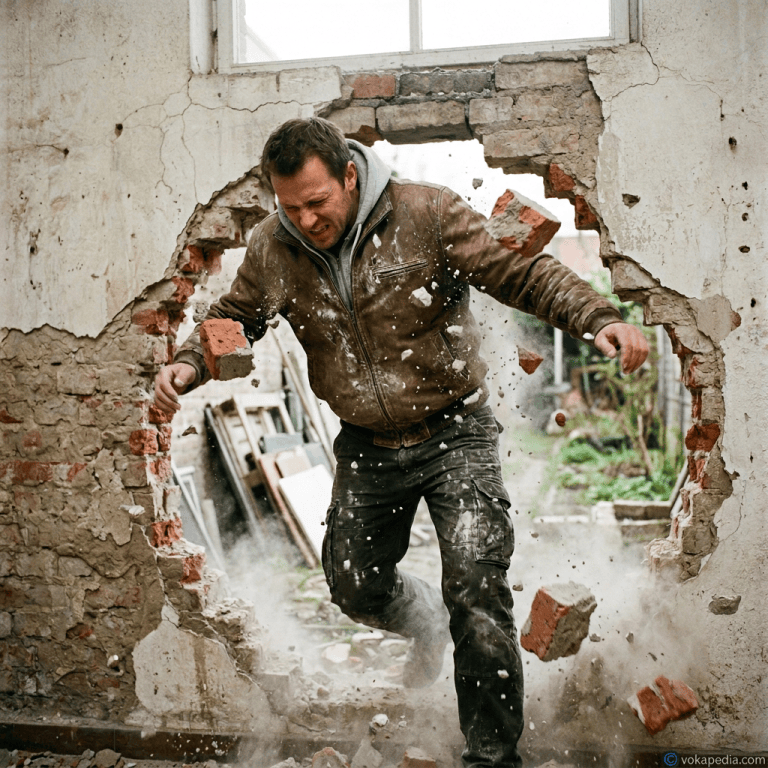
Man wearing brown jacket and gray hoodie bursting through a crumbling brick wall

How can the same verb, “break”, create such completely different meanings simply by changing “the little word” that follows it? The phrasal verbs “break through” and “break up” both come from the basic idea of breaking, but their meanings have…


Tired vs. Tiring: What’s the Difference?

Cyclist riding on a winding road through dry, rolling hills under a clear blue sky

How can two nearly identical words reveal such a crucial difference between what we feel and what makes us feel it? The distinction between “tired” and “tiring” comes from the verb “tire“, which entered English from Old English tēorian, meaning…

Words of the Day: Worth & Worthy

Scale balancing a book labeled 'Worthy' and a medal labeled 'Excellence' on one side with a teacher, student, and school building model on the other

How can two words that both express value behave so differently in a sentence? The adjective “worth” comes from Old English weorþ, meaning “valuable,” “worthy,” or “having value,” while worthy, derived from the same Germanic root with the adjective-forming suffix…

Interesting Words of the Day: Hard & Hardly

Abstract cracked surface with a white feather and electric-like lines

Can one tiny ending completely reverse the meaning of a word? Have you ever wondered why “hard” and “hardly” look almost identical but mean completely different things? The adjective and adverb “hard” comes from Old English heard, meaning firm, solid,…

Confusable Words of the Day: Few & Little

Antique balance scale with powder in one pan and colorful marbles in the other

Have you ever wondered how adding just one tiny letter “a” can completely change the meaning of a sentence? That is exactly what happens with little, few, a little, and a few. The words little and few come from Old…

Confusable Words of the Day: High & Tall

NYC skyscrapers into sky, tiny carved © vokapedia.com

Why does English describe a skyscraper as “tall” but its floors as “high“? Have you ever wondered why we say a tall person but a high mountain? Although “high” and “tall” both describe height, they are not interchangeable. “High” comes…

Confusable Words of the Day: Classic & Classical

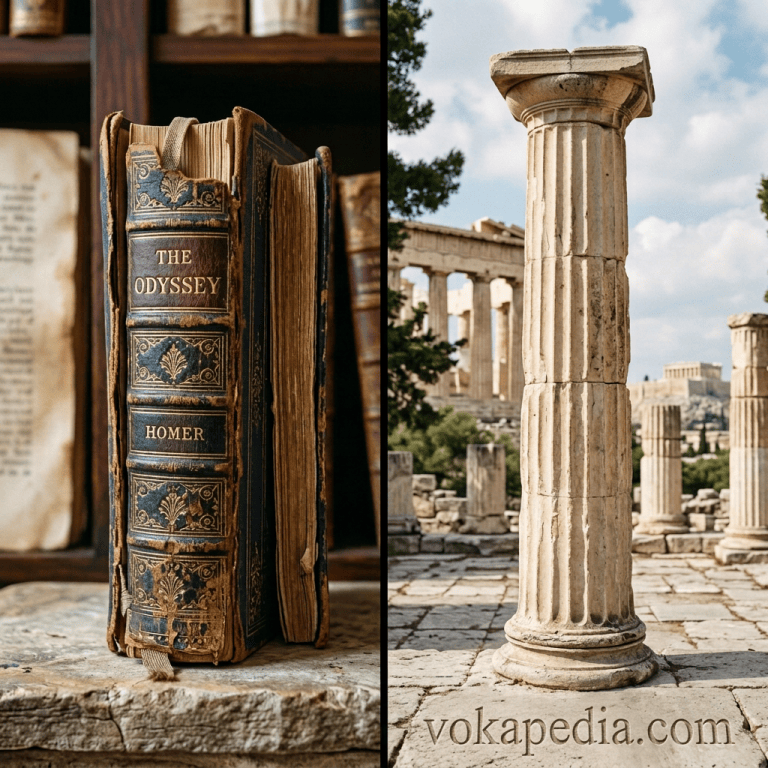
Worn leather-bound book titled The Odyssey by Homer next to ancient Greek column ruins

Have you ever wondered why classic and classical look almost identical but mean different things? Both words ultimately come from the Latin classicus, meaning “belonging to the highest class” or “of the highest rank.” In ancient Rome, classicus referred to…

Phrasal Verbs of the Day: Bring About or Bring On?

Colorful dominoes arranged in a complex pattern on a wooden table with a person watching in the background

“What can bring about a change? And what can bring on a problem?” The phrasal verb “bring about” combines bring (Old English bringan, “to carry, bring, or cause to come”) with about, originally suggesting movement “around” or “to a state.”…

Confusable Words of the Day: Economic & Economical

Jar filled with coins labeled vokapedia.com on wooden table next to steaming cup and handwritten note by rainy window

Have you ever wondered why we say “economic” growth but an “economical” car? Although “economic” and “economical” share the same origin, they have developed different meanings. Both ultimately come from Greek “oikonomía” (“household management”), through Latin “oeconomia” and French. “Economic”…

Confusable Verbs of the Day: Wear, Put On, and Dress

Flat lay clothing arranged in sections

What’s the difference between “dress”, “put on“, and “wear”, and where do these words come from? Although these three verbs all relate to clothing, they describe different stages of the same process. “Dress” comes from the Old French dresser, meaning…

Phrasal Verbs of the Day: Look Up or Look Out?

Open Oxford English Dictionary with a highlighted word, smartphone showing a Google search for 'kayak position', pen, and coffee mug saying 'Coffee & Knowledge' on a wooden table

When you hear someone shout “Look up!” or “Look out!”, would you know which way to move, or whether to duck? The phrasal verbs “look up” and “look out” both stem from the Old English verb “lōcian“, meaning “to see,…