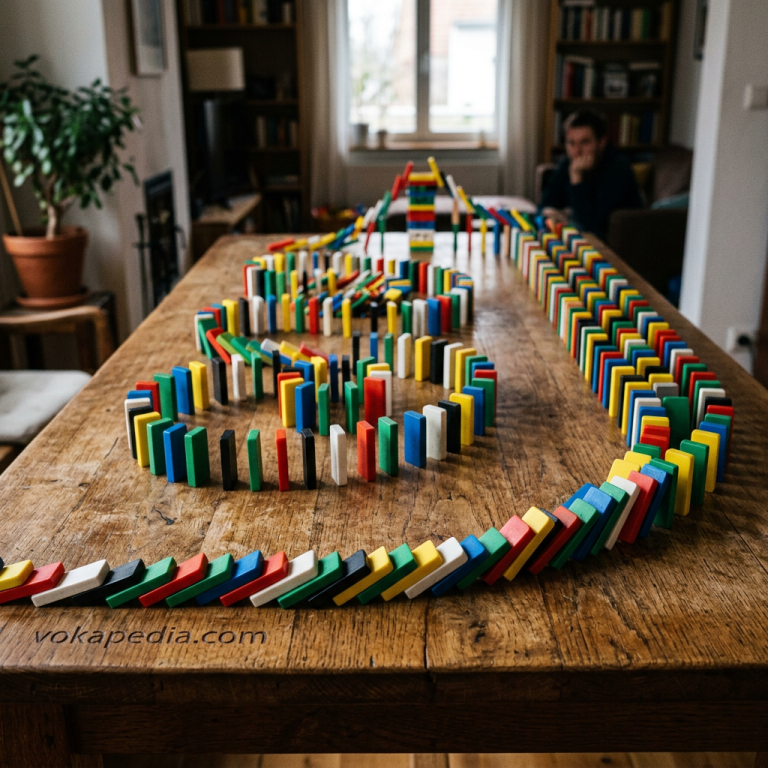
Welcome back to our “Reading Comprehension and Language Development” series! This time, we are exploring something almost everyone experiences but rarely thinks about: why can five minutes feel endless when we are waiting, yet an entire hour disappear when we are absorbed in something we enjoy? Along the way, we will sharpen your reading skills and strengthen the kind of language you need for IELTS or TOEFL success.
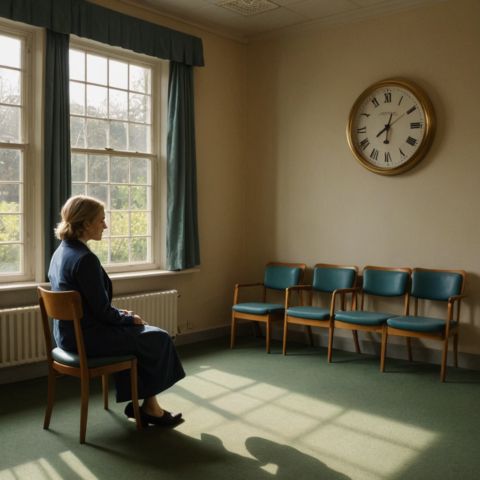
At 8:55 on a rainy Monday morning, Alice stood outside a hospital examination room, staring at the clock.
The receptionist had told her that the doctor would see her in five minutes.
Five minutes.
It sounded harmless.
Yet after what felt like half an hour, Alice looked at the clock again.
Only two minutes had passed.
She smiled bitterly. How can five minutes feel longer than an hour?
Psychologists have long been interested in this strange feature of human perception. Time does not always feel as though it passes at the same speed. When people are anxious, uncertain, or focused intensely on an expected event, they tend to monitor time more closely. The more attention we give to the passing seconds, the longer those seconds can appear to last.
Alice knew none of this. She simply knew that the clock seemed to be moving deliberately slowly.
She checked her phone.
There were no new messages.
She checked the clock again.
Still 8:57.
To distract herself, she began observing the people around her. An elderly man was reading a newspaper. A child was quietly drawing on a piece of paper. A nurse walked briskly down the corridor.
For a moment, Alice stopped thinking about the time.
Then something unexpected happened.
She became interested in the child’s drawing.
The child was drawing a house with an enormous red door, three trees, and what appeared to be a rather ambitious blue sun. Alice smiled.
When she finally looked at the clock again, it was 9:04.
Seven minutes had passed without her noticing.
The contrast reminded her of Samuel Beckett’s Waiting for Godot, in which two characters spend much of their time waiting for someone who never arrives. The play is fictional and philosophical, but its central experience is remarkably familiar: waiting can make time itself feel like part of the problem.
Researchers suggest that our perception of time is influenced not only by the clock but also by our attention, emotions, expectations, and level of engagement. Waiting in uncertainty can therefore feel particularly long, whereas meaningful activity can make the same amount of time seem to disappear.
The doctor eventually called Alice’s name.
The appointment lasted twenty minutes.
On her way home, Alice realised that nothing about the clock had changed. What had changed was her relationship with it.
Perhaps waiting, she thought, does not always have to be empty time.
Sometimes, the minutes we cannot control are precisely the minutes in which we can notice something, learn something, imagine something, or simply breathe.
And perhaps that is the quiet secret of waiting:
We may not be able to decide how long a moment lasts, but we can still decide what we do with it.
True or False?
Decide whether the statements are True (T) or False (F) according to the story.
- Alice was told that she would see the doctor in five minutes.
- Alice believed that more than thirty minutes had actually passed.
- The story suggests that anxiety can affect people’s perception of time.
- Alice repeatedly checked her phone because she was expecting an important message.
- Watching the child draw helped Alice stop concentrating on the passing time.
- Alice noticed that seven minutes had passed while she was observing the drawing.
- Waiting for Godot is mentioned as an example of a scientific study of time perception.
- The story suggests that people’s emotions and attention can influence how long a period of time feels.
- Alice’s appointment lasted less than five minutes.
- At the end of the story, Alice realises that people cannot always control how they experience waiting.
Vocabulary — Choose the Closest Synonym
- harmless
A) unlikely to cause difficulty or harm
B) extremely dangerous
C) difficult to understand
D) completely unnecessary - perception
A) physical movement
B) the way something is noticed or understood
C) scientific measurement
D) personal achievement - anxious
A) relaxed
B) uncertain or worried
C) enthusiastic
D) indifferent - monitor
A) observe or check regularly
B) completely ignore
C) postpone
D) interrupt - deliberately
A) accidentally
B) slowly
C) intentionally
D) repeatedly - distract
A) prevent someone from concentrating on something
B) encourage someone to continue
C) explain something clearly
D) remind someone of something - ambitious
A) unusually large or difficult to achieve
B) poorly designed
C) unnecessary
D) traditional - engagement
A) involvement or active attention
B) confusion
C) physical distance
D) disagreement - uncertainty
A) confidence about the future
B) a lack of knowledge or certainty
C) complete satisfaction
D) strong determination - precisely
A) approximately
B) eventually
C) exactly
D) occasionally
Mini Glossary (English-Turkish)
perception — the way in which someone notices, understands, or experiences something.
Turkish: algı, algılama
anxious — worried or nervous about something that may happen.
Turkish: endişeli, kaygılı
monitor — to watch, check, or observe something carefully over a period of time.
Turkish: takip etmek, gözlemlemek
deliberately — intentionally and consciously.
Turkish: kasten, bilerek
distract — to take someone’s attention away from what they are concentrating on.
Turkish: dikkatini dağıtmak
ambitious — involving a strong desire to achieve something difficult or impressive.
Turkish: iddialı, büyük hedefleri olan
engagement — active involvement, interest, or attention in something.
Turkish: katılım, ilgi, meşguliyet
uncertainty — a situation in which something is not known or certain.
Turkish: belirsizlik
anticipate — to expect or predict that something will happen.
Turkish: beklemek, öngörmek
perceive — to notice or understand something in a particular way.
Turkish: algılamak, fark etmek
Reading Comprehension
Multiple Choice
1. Why did the five minutes seem unusually long to Alice?
A) The hospital clock was broken.
B) She was highly focused on the passage of time while waiting.
C) The receptionist had given her incorrect information.
D) She had forgotten what time she had arrived.
2. What caused Alice to stop concentrating on the clock?
A) She received a phone call.
B) The doctor called her name.
C) She became interested in the child’s drawing.
D) The receptionist spoke to her.
3. Why is Waiting for Godot mentioned in the story?
A) It presents a familiar experience of waiting and uncertainty.
B) It explains the scientific causes of time perception.
C) It describes a hospital experience similar to Alice’s.
D) It proves that waiting always feels unpleasant.
4. What does the story suggest about the perception of time?
A) It is completely determined by clocks.
B) It is identical for everyone in every situation.
C) It can be influenced by attention, emotions, and expectations.
D) It becomes slower as people grow older.
Sentence Completion
Complete each sentence with NO MORE THAN THREE WORDS.
5. Alice was waiting outside a hospital __________.
6. The child was drawing a house with an enormous __________.
7. Alice’s appointment lasted __________.
8. The story suggests that meaningful activity can make time seem to __________.
Matching Information
Match each statement with the correct idea from the story.
A. Alice initially becomes highly aware of time.
B. Alice becomes distracted by something around her.
C. The story introduces a broader psychological explanation.
D. Alice develops a different attitude towards waiting.
9. Alice begins to notice her surroundings rather than constantly checking the clock.
10. Alice concludes that people may not control the length of waiting, but they can control how they use that time.
Answer Key
True/False: 1 T, 2 F, 3 T, 4 F, 5 T, 6 T, 7 F, 8 T, 9 F, 10 T
Vocabulary: 1 A, 2 B, 3 B, 4 A, 5 C, 6 A, 7 A, 8 A, 9 B, 10 C
IELTS: 1 B, 2 C, 3 A, 4 C, 5 examination room, 6 red door, 7 twenty minutes, 8 disappear, 9 B, 10 D
Story Explanation
Story Title: The Psychology of Waiting
Story Level: IELTS Band 8+ / TOEFL iBT 6
Suitable for Whom: Advanced English learners preparing for IELTS Academic, TOEFL, university-level English, and challenging reading and vocabulary tasks.
Main Idea:
Our perception of time is not always determined by the clock. Anxiety, uncertainty, attention, expectations, and engagement can make the same period of time feel either remarkably long or surprisingly short.
Summary
Alice waits anxiously for a hospital appointment and discovers that five minutes can feel much longer when her attention is fixed on the clock. When she becomes absorbed in a child’s drawing, several minutes pass without her noticing. Inspired partly by the idea of waiting in Beckett’s Waiting for Godot, Alice realises that although people cannot always control how long they must wait, they can choose how they experience and use that time.
A Question for You
Think of a time when you were waiting for something important—a message, an exam result, a flight, an appointment, or someone you cared about. Did the waiting make time feel unusually slow? What could you do differently next time to make those minutes feel more meaningful?
Note. VoKaPedia also has a dedicated podcast section where you can find a variety of engaging episodes. I’d definitely recommend exploring it—you might discover something new and inspiring to listen to. Go to VoKaPedia Podcasts.